
 Español
 Français

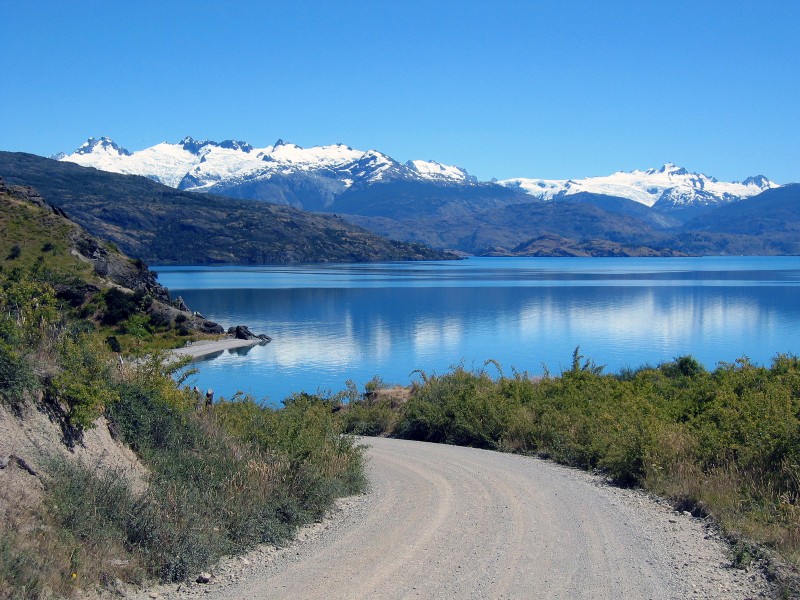
Because it is here, at the end of the world, that the most spectacular landscapes of the Great South are gathered: the mythical Fitz Roy massif, the fantastic ice cap of “Campo de Hielo Sur” and its gigantic glaciers, including the famous Perito Moreno, and, on the Chilean side, the Torres del Paine massif and the Patagonian canals, between majestic fjords and hanging glaciers…
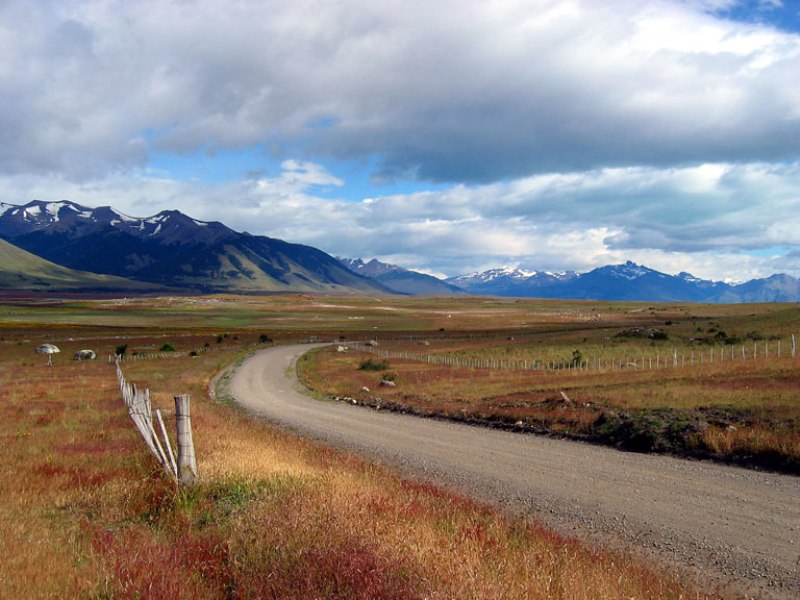
Three natural environments make up this vast region: in Chile, on the western slope of the Andes, mountain ranges covered with dense vegetation; in Argentina, on the eastern slope of the Andes, interspersed with deep depressions, the famous “mesetas”, immense semi-arid and dusty steppes of the Patagonian shelves, whose altitude varies between 1,500 m at the foot of the Cordillera and 700 m on the edge of the Atlantic and where only sparse vegetation of Quillimbay, Calafate and Coiron bushes remains; finally, a coastline marked by geological accidents unfolding wild and torn coasts where pleasant little port towns are hidden.
Patagonia is the extreme tip of the South American continent named by Ferdinand Magellan and his chronicler Pigafetta who, one winter day in 1520, landed on a cold and desolate shore. According to some historians, this name comes from the large footprints they discovered there (in Spanish, patagón means an individual with large feet), traces left by the skin shoes of the Indians. Others think that it is to the giant Patagon – a character from a story of chivalry very popular in Spain at the time – that the region owes its name.
The British naturalist Charles Darwin is probably the traveler who most accurately expressed the emotion felt when faced with the immensity of Patagonia. In 1836, returning to England after five years of sailing on the Beagle, he recorded his impressions in “A Naturalist’s Voyage Round the World”:
“When I recall the memories of the past, the plains of Patagonia frequently present themselves to my memory, and yet all travelers agree in affirming that they are miserable deserts. One can hardly attribute to them anything but negative characteristics; one finds there, in fact, neither habitations, nor water, nor trees, nor mountains; one hardly meets there a few stunted shrubs. Why then did these deserts – and I am not the only one who has experienced this feeling – make so deep an impression on me?”
Come to Patagonia, I’ll take care of everything!